
Understanding the brain differently.
Measure, reflect, support.
Dynamic neurofeedback is based on a simple idea: the brain has a natural capacity to adapt. When it receives clear information about its own activity, it can gradually adjust its functioning.
At INFC, we use this approach in a structured, non-invasive, and human framework. The technology measures and reflects brain activity; psychological support helps to understand, guide, and adjust the journey. Our goal is not to force or correct the brain: it is to provide a framework in which it can listen to itself better, regulate itself better, and find more stability.
The brain learns by receiving information
The brain constantly functions through adjustments: it observes, compares, corrects, anticipates, and adapts. This natural adaptation capacity is called neuroplasticity. Dynamic neurofeedback relies on this principle: it allows the brain to receive real-time feedback on its activity. This feedback acts as a mirror. It does not command the brain, stimulate it, or force it to produce a specific state: it simply returns information. From there, the brain can better perceive its own variations and find more flexibility.
A simple loop
01 · Listen
Passive sensors placed on the scalp and ears measure the brain's natural electrical activity in real time. They send no current and do not stimulate the brain: they read the information.
02 · Reflect
While you watch a movie or listen to music, the system returns discrete information via a micro-interruption in sound when it detects a variation. This is not a correction, but a signal — like a mirror.
03 · Regulate
The brain naturally uses this information to adjust itself, without external direction or conscious effort. Regulation happens gradually, at each person's own pace.
La Capture (Écoute passive)
Des capteurs d'EEG passifs écoutent l'activité électrique naturelle de votre cerveau. Aucun courant n'est émis. Vous vous relaxez.
L'Analyse en Temps Réel
Le logiciel analyse les signaux 256 fois par seconde. Il repère les sursauts de tension ou micro-instabilités qui précèdent le stress.
Le Feedback (Auto-correction)
Une micro-interruption dans le flux audio signale l'instabilité au cerveau, qui choisit instantanément de se réorganiser.
Dynamic neurofeedback is not a medication. It does not replace medical treatment. It does not diagnose. It does not promise identical results for everyone. It does not force the brain to function in a precise way. It is a non-invasive brain training that supports the brain's natural capacity to self-regulate. At INFC, this approach is always part of a human, structured, and responsible framework. When a situation requires medical advice, specialized follow-up, or additional guidance, we state it clearly.
A non-invasive method
The dynamic neurofeedback used at INFC is a non-invasive method: sensors placed on the head read brain activity but send no current to the brain. The session is:
You have nothing to achieve.
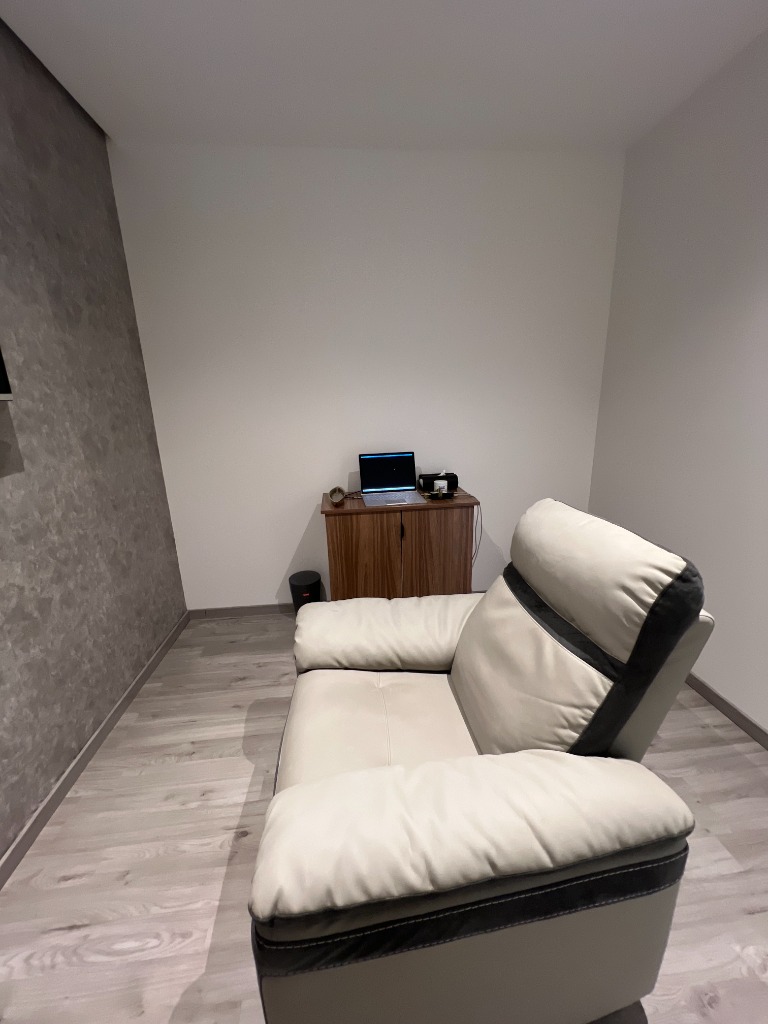
A dynamic neurofeedback session takes place in a quiet and comfortable setting. You are seated in an armchair; sensors are placed on your scalp and ears. You can watch a movie, listen to music, or simply relax. The system monitors variations in your brain activity and returns discrete information in the form of micro-interruptions in the audio. You do not need to concentrate, meditate, or "do well". The brain receives information about itself and can gradually adjust its activity. A session lasts about 33 minutes; the number of sessions depends on the needs, profile, goal, and observed progress.
Brain mapping (qEEG)
Brain mapping, or qEEG, is a measurement tool that allows us to observe certain aspects of brain functioning. At INFC, it can be used to better understand a person's neurophysiological profile, guide support, and track progress. It does not replace a medical diagnosis, does not predict results, and does not reduce a person to numbers.
Neuroplasticity
Neuroplasticity refers to the brain's capacity to adapt, modify certain connections, learn, and reorganize throughout life. Dynamic neurofeedback fits into this learning logic: it does not force the brain, it gives it information that can help it adjust better. A progressive approach, respectful of each person's pace.
A brain never functions out of context: it belongs to a person, with their history, emotions, lifestyle, constraints, and goals. That's why INFC does not just offer sessions: we offer support. The team takes time to understand your situation, track your progress, and adjust the journey. Technology gives information to the brain. Human support gives meaning to progress.
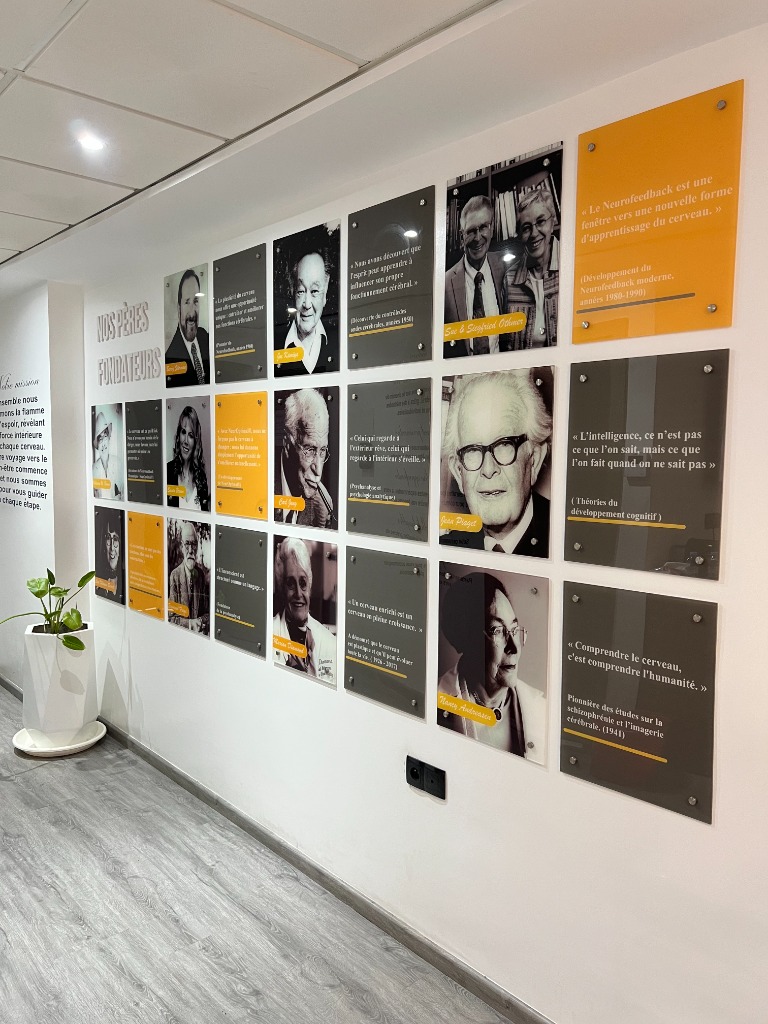
Neurofeedback is part of a research field that explores links between brain activity, self-regulation, attention, stress, sleep, emotions, and learning. Results can vary by protocol, profile, and method. At INFC, we present this literature with caution: we do not promise standardized results, do not replace a medical diagnosis, and do not present neurofeedback as a unique solution.
Dynamic neurofeedback opens up a new way to support the brain: gentler, more respectful, more progressive. But technology alone is never enough. Every INFC journey combines brain training, clinical listening, observation, psychological support, and personalized adjustment. We do not seek to replace medicine, psychology, or education: we create a complementary, structured, and human space.